Prehistoric Hillfort and Early Settlement
The very heights above Povir preserve traces of this prehistoric past. Archaeologists have identified the site on Tabor Hill (registered heritage EŠD 566) as a multi-peaked hillfort dating to the Late Bronze and Iron Ages.
This castelliere or gradišče (prehistoric fort) consisted of three stone-crowned summits ringed by a continuous wall. Within the earthworks at the foot of the heights, excavators found a prehistoric cremation cemetery and even the skeleton of the late Iron Age warrior in a cave.
In other words, the site was an important fortified center in prehistory. Even the medieval-era description of the site notes these layers: the same hill that bears the old tabor tower once supported this earlier fort, and the Roman-era phases of habitation are evidenced by building remains in the area.
Roman period
Over the centuries that followed antiquity, Povir remained inhabited. In Roman times it was an important rural hamlet in the hinterland of Aquileia; indeed, the modern village lies atop its Roman foundations.
But with the end of antiquity and the migrations of the early Middle Ages, much of the older village declined, leaving the hilltop fortification largely unused until the medieval era. Its visible ramparts on the heights would later inspire local tradition and place-names, but for many centuries the site was simply the wooded ruins of an ancient stronghold.
15th Century: The Medieval Tower and Refuge
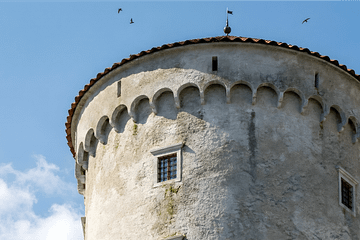
In the late Middle Ages – specifically at the end of the 15th century – the lords of Švarcenek Castle (Schwarzenberg) on nearby Podgrad saw the need to re-fortify the hill above Povir. Around this time they built a stone watchtower and refuge on the summit of Tabor Hill. This “Tabor tower” was part of a chain of such fortified refuges constructed in the area during the Ottoman wars. The goal was to give the villagers of Povir a place of shelter against raids and to enable fires or smoke signals to be sent between defensive posts along the Karst ridge. In Slovenian and Central European lands the word tabor itself came to denote these fortified communal refuges (sometimes built around churches, sometimes as free-standing keeps). The Povir tower specifically served as a fortified gathering point for local peasants and as a military outpost controlled by the Švarcenek family.
For a time – roughly from the early 1500s into the 1600s – the Tabor tower fulfilled its purpose.
It appears in regional records as a small “castellum” not reaching to the level of a castrum, which clearly didn’t evolve into a castle due to the proximity to Sežana, Školj and Švarcenek castles, and it used to guard the approaches to the Vipava Valley.
17th to 19th Centuries: Disuse and Total Abandonment
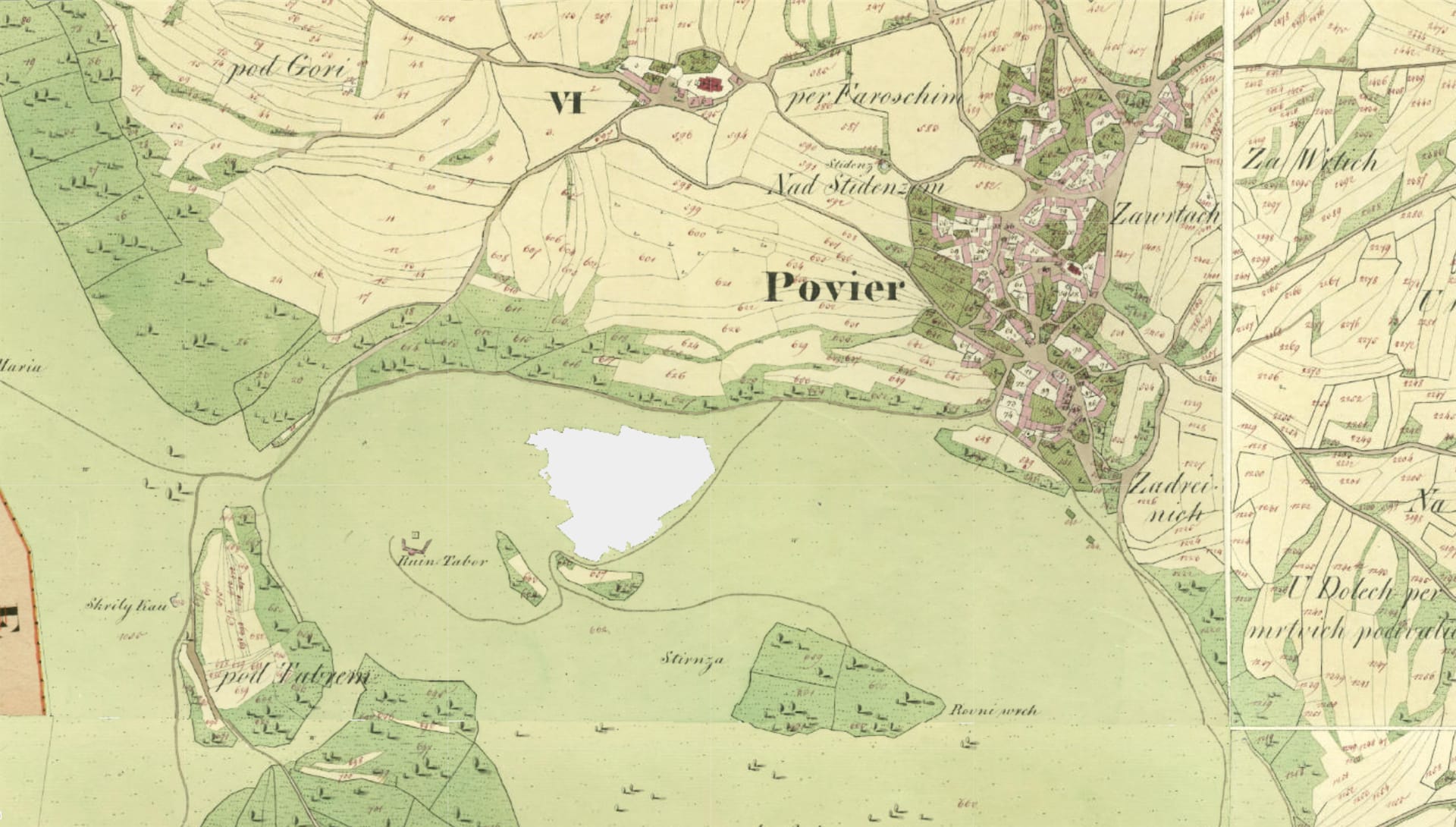
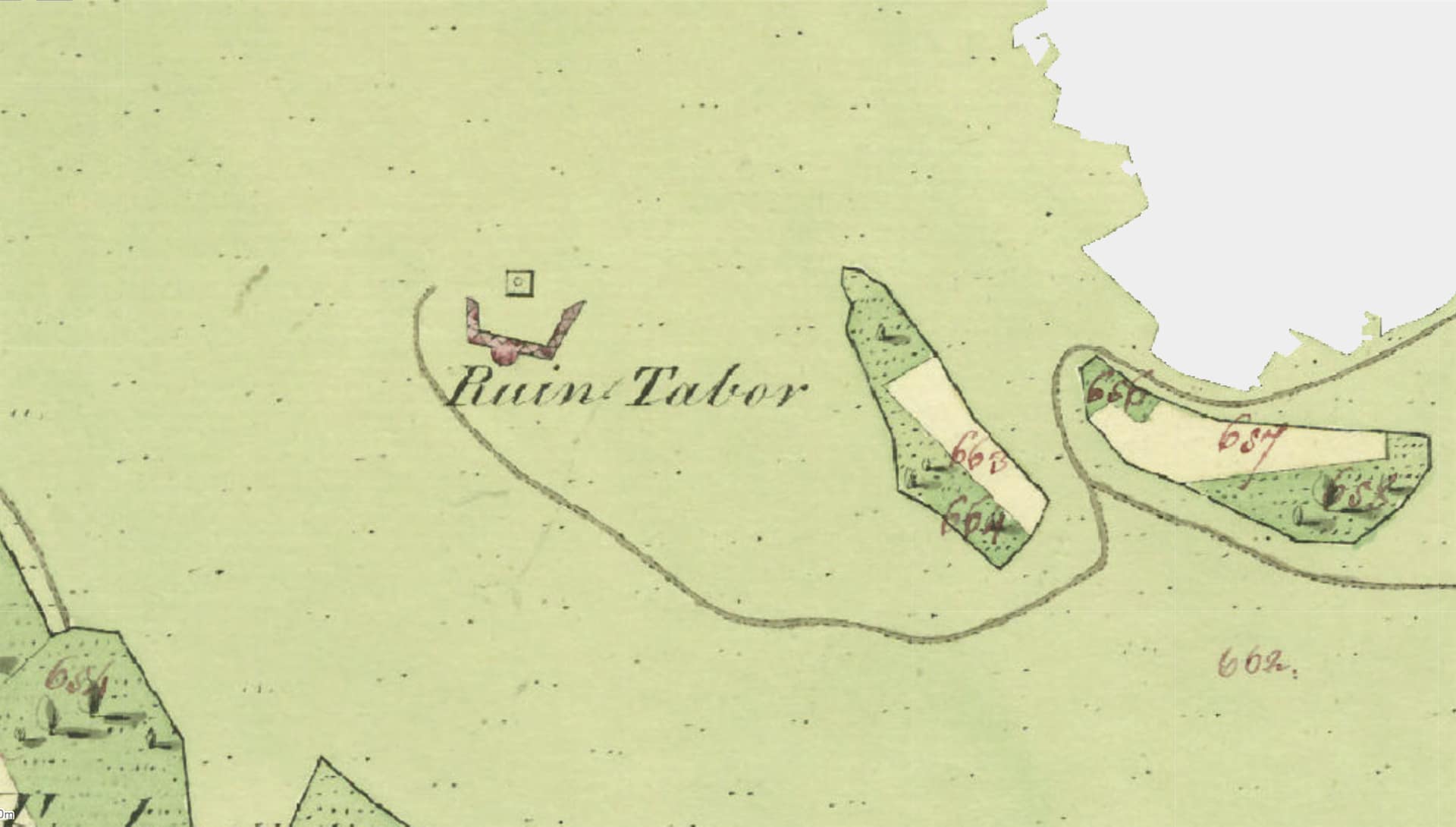
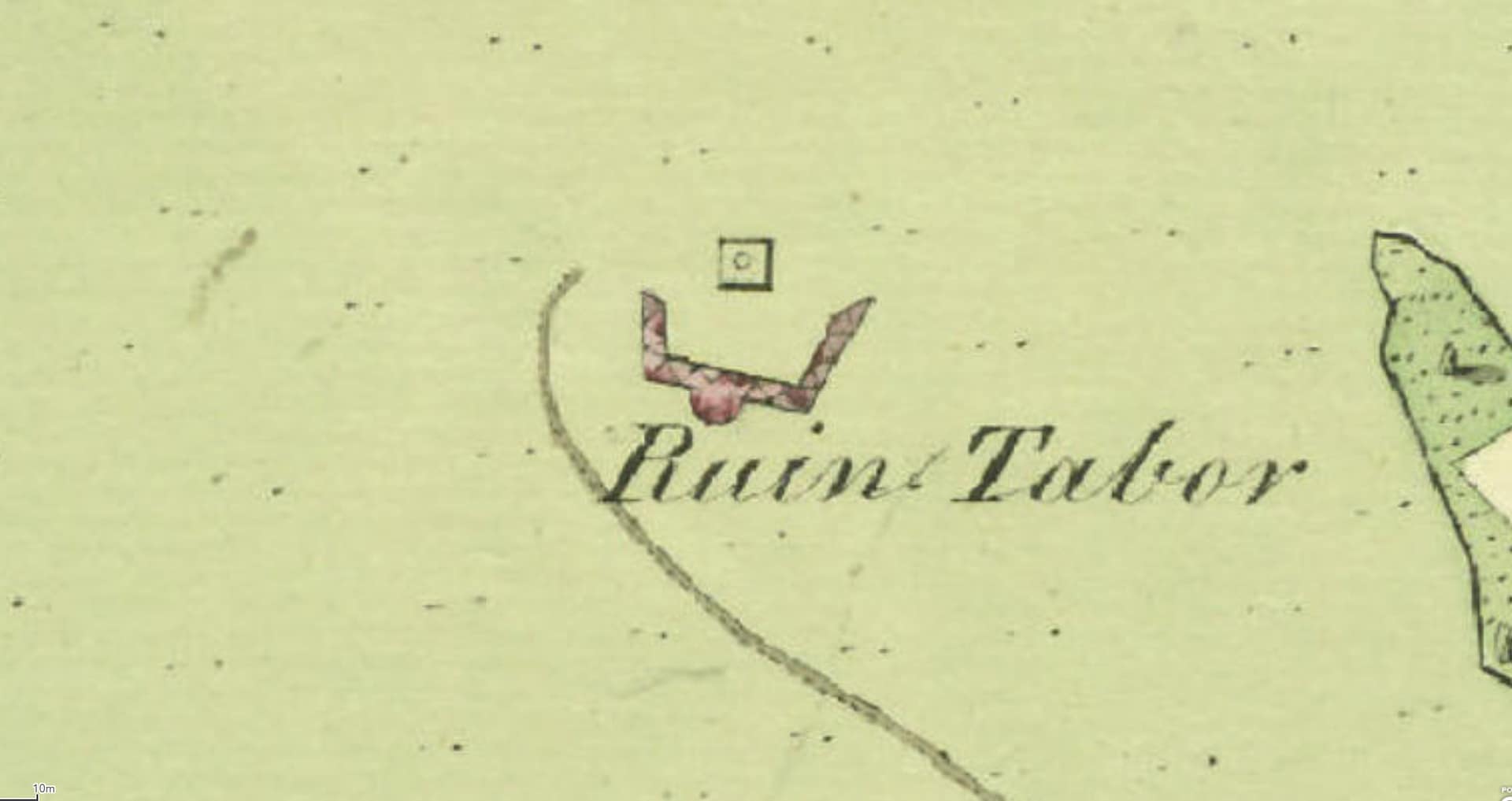
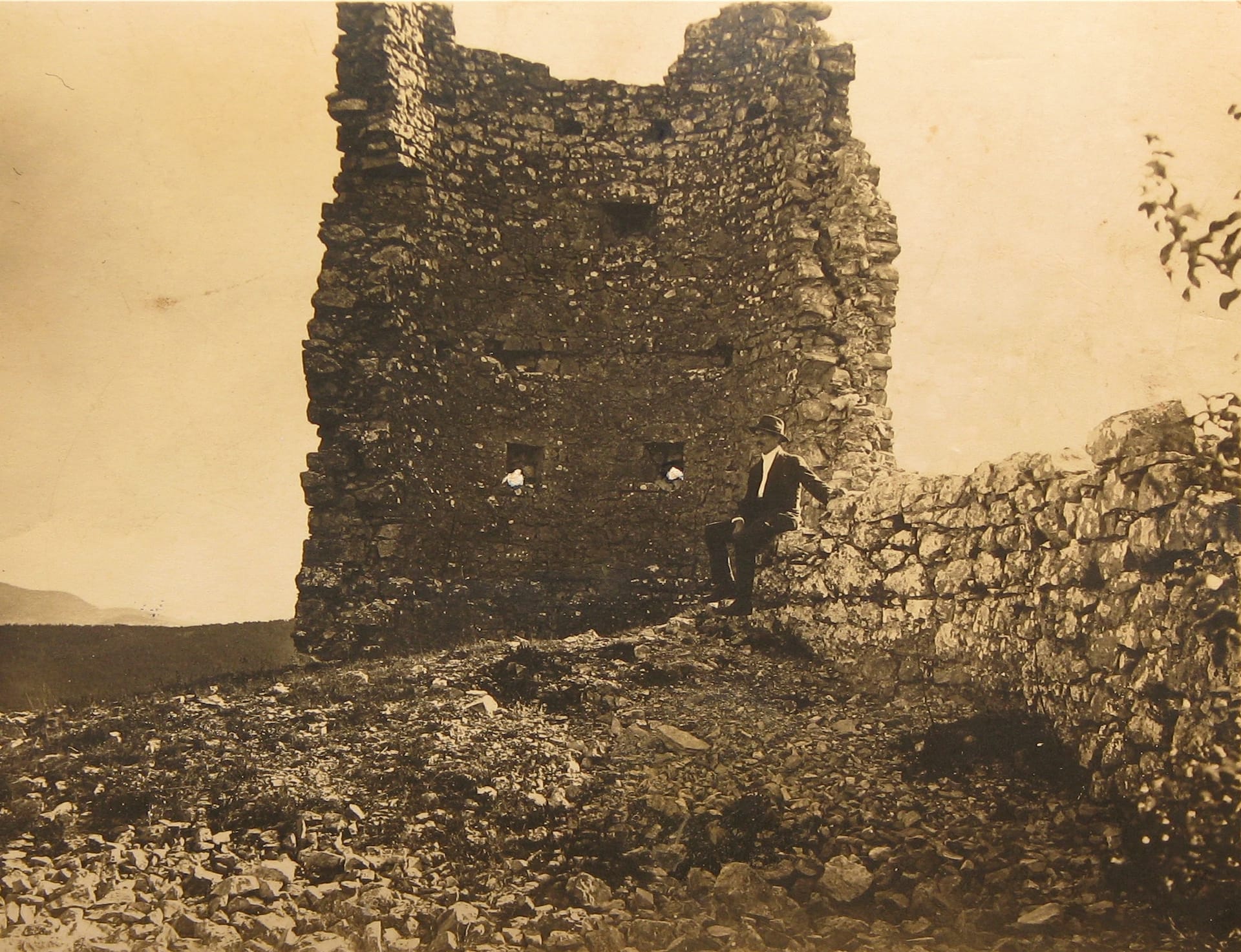
But by the late 17th century the frontier had moved eastward and the Ottoman threat diminished. The tower lost its military function and was increasingly abandoned. Contemporary accounts note that by about 1700 the walls were already crumbling. Over the next centuries the structure fell into ruin; roof and upper walls collapsed, and only portions of the lower masonry outcropped through the forest underbrush. Local peasants continued to farm the slopes, and the old stones gradually became blended into the rustic landscape.
20th Century: Ruins Destruction
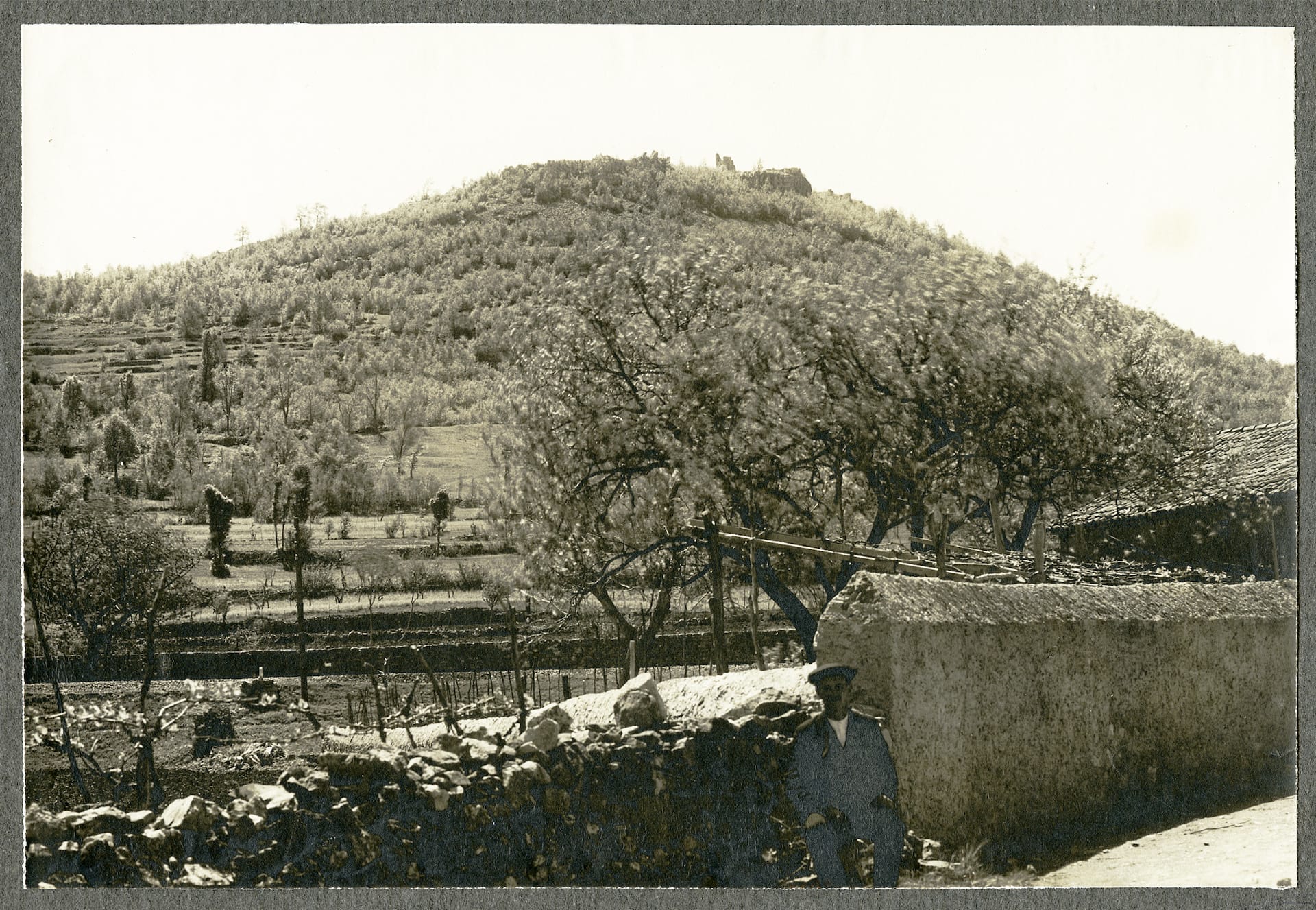
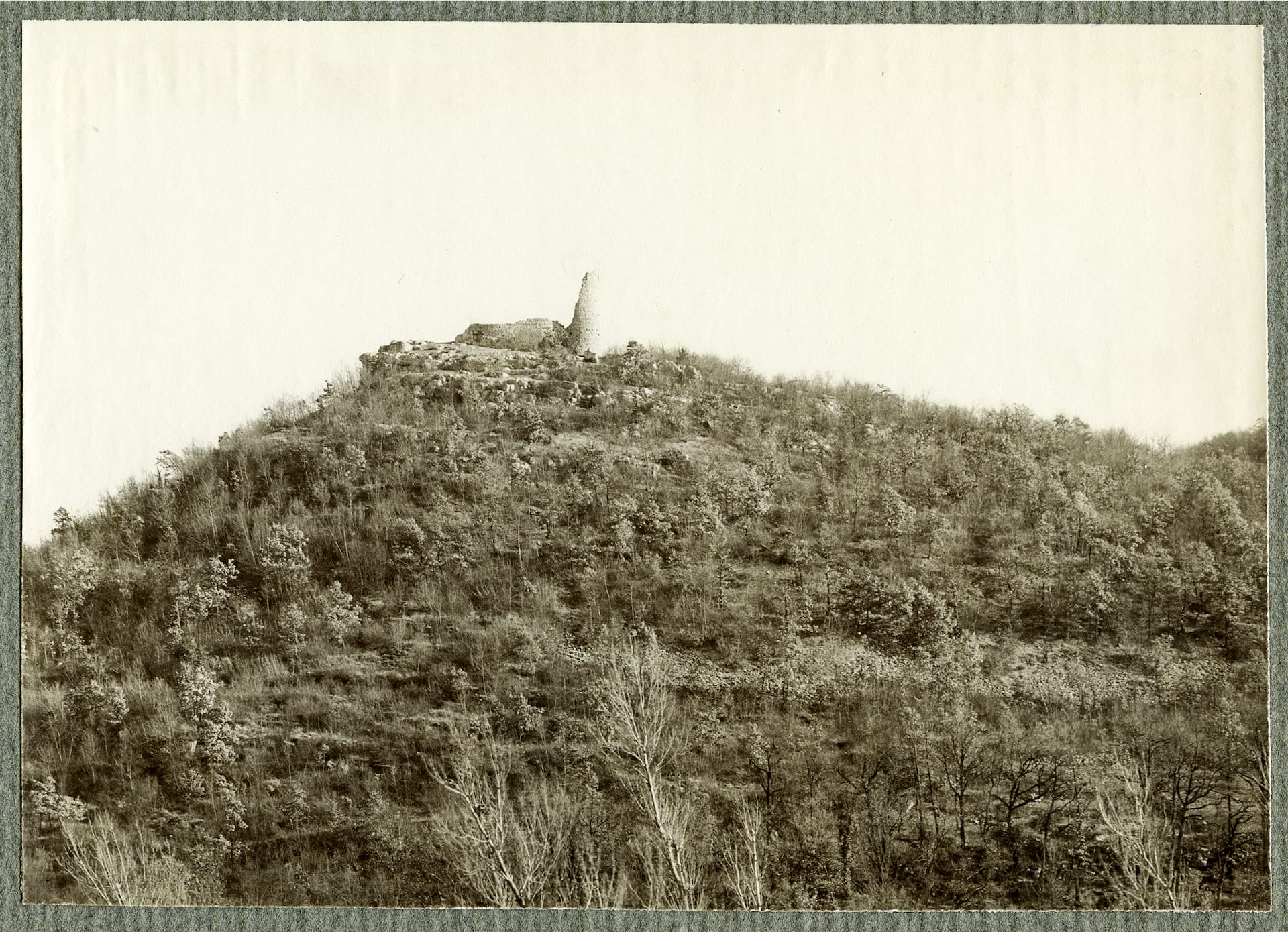
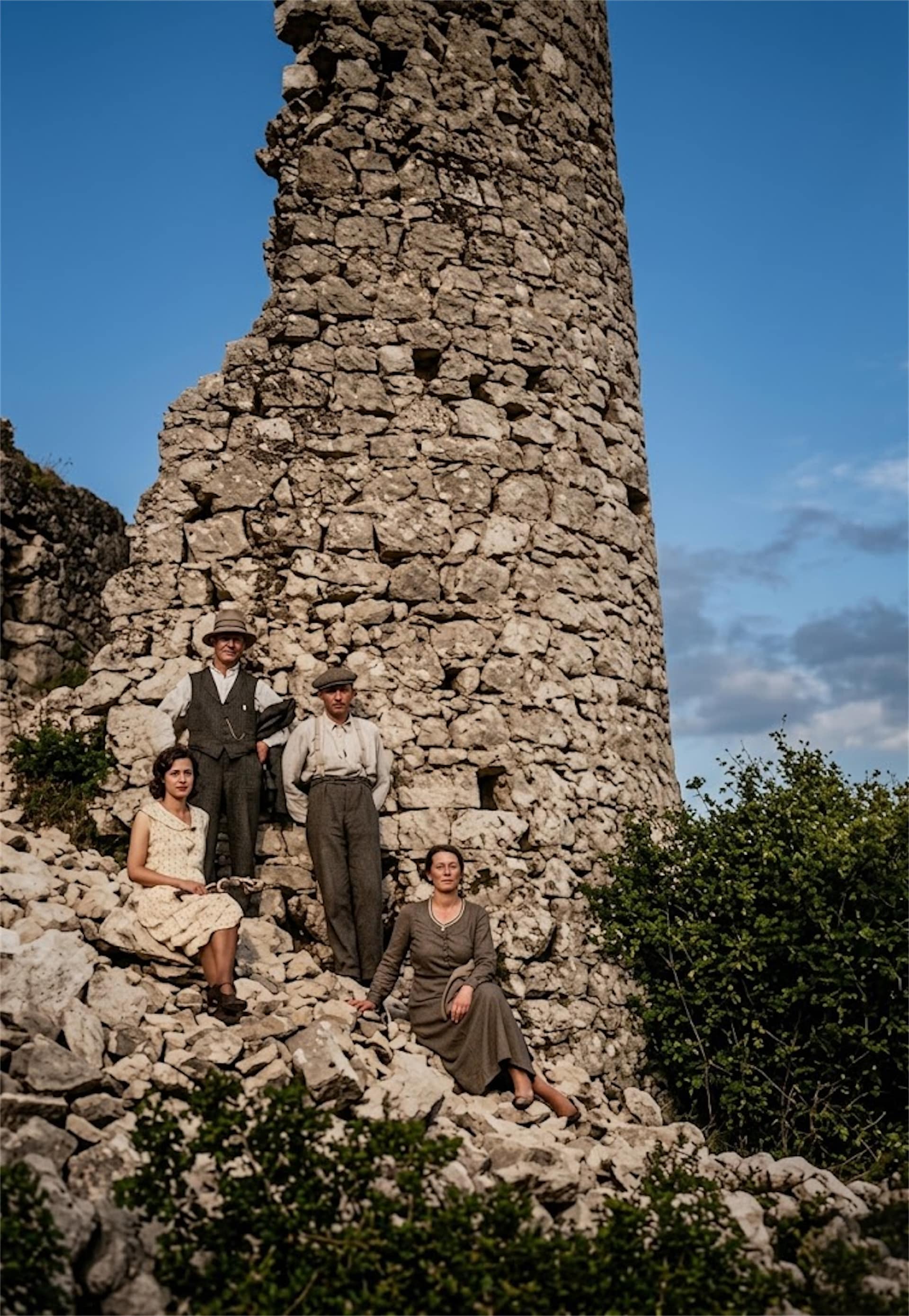
Although the old tower had collapsed into ruins by the 18th century, it still marked the hilltop. In fact, the second World War brought the final destruction of the remains.
During the German occupation (1941–1943) and the partisan warfare in the Karst, German soldiers dynamited what was left of the tower while pursuing local resistance fighters.
After the fighting moved on, villagers surveyed the rubble.
A local tradition records that many of the tower’s cut limestone blocks were taken down the hill and reused to build one of Povir’s largest houses: what nowadays is the Krajevna skupnost Povir.
By war’s end the tabor had vanished almost completely: only scattered foundation stones and patchy wall footings remained. Post-war forestry and agriculture further concealed the site, which was left unmarked for decades.
21st Century: Research and 3D Reconstruction
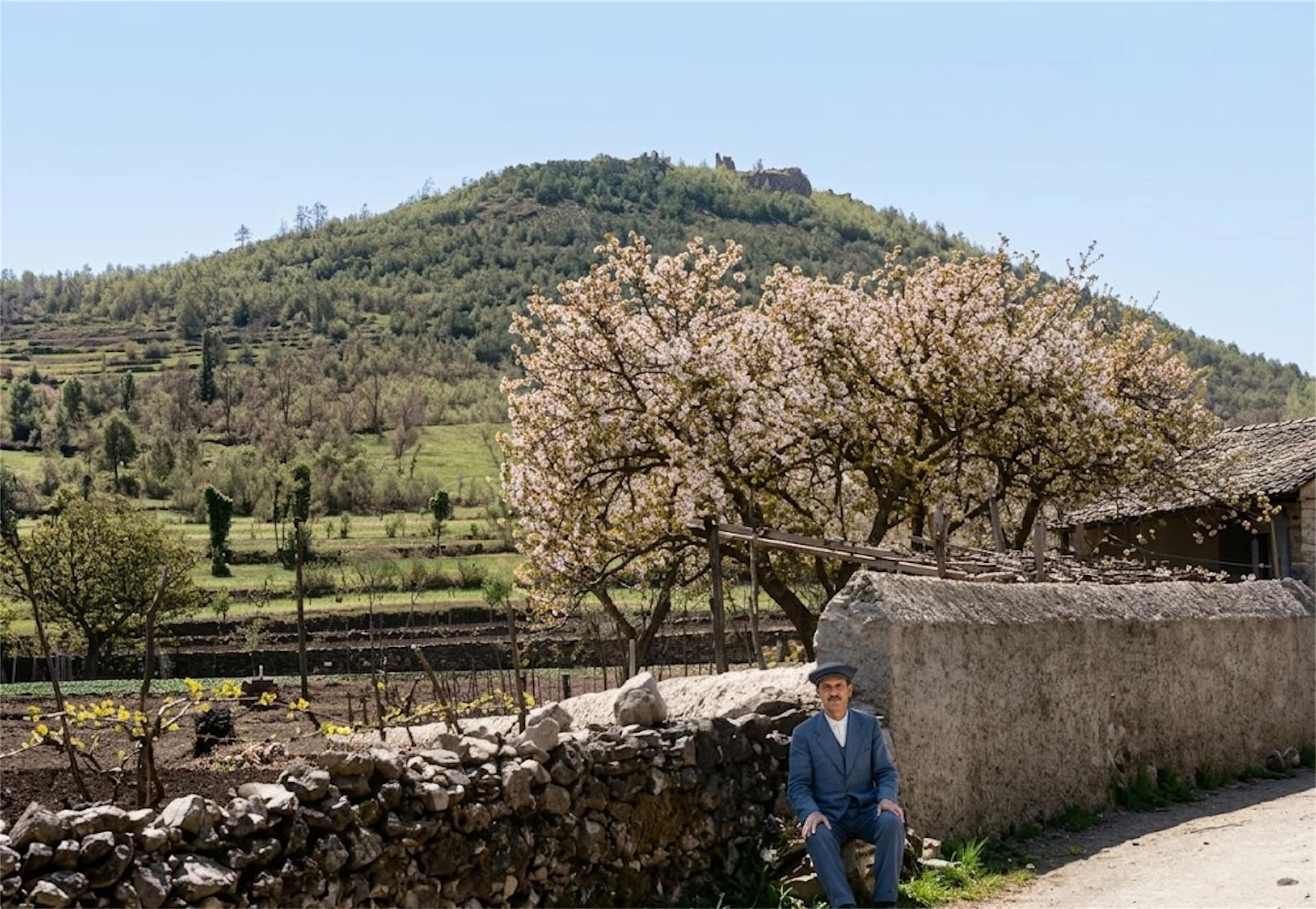
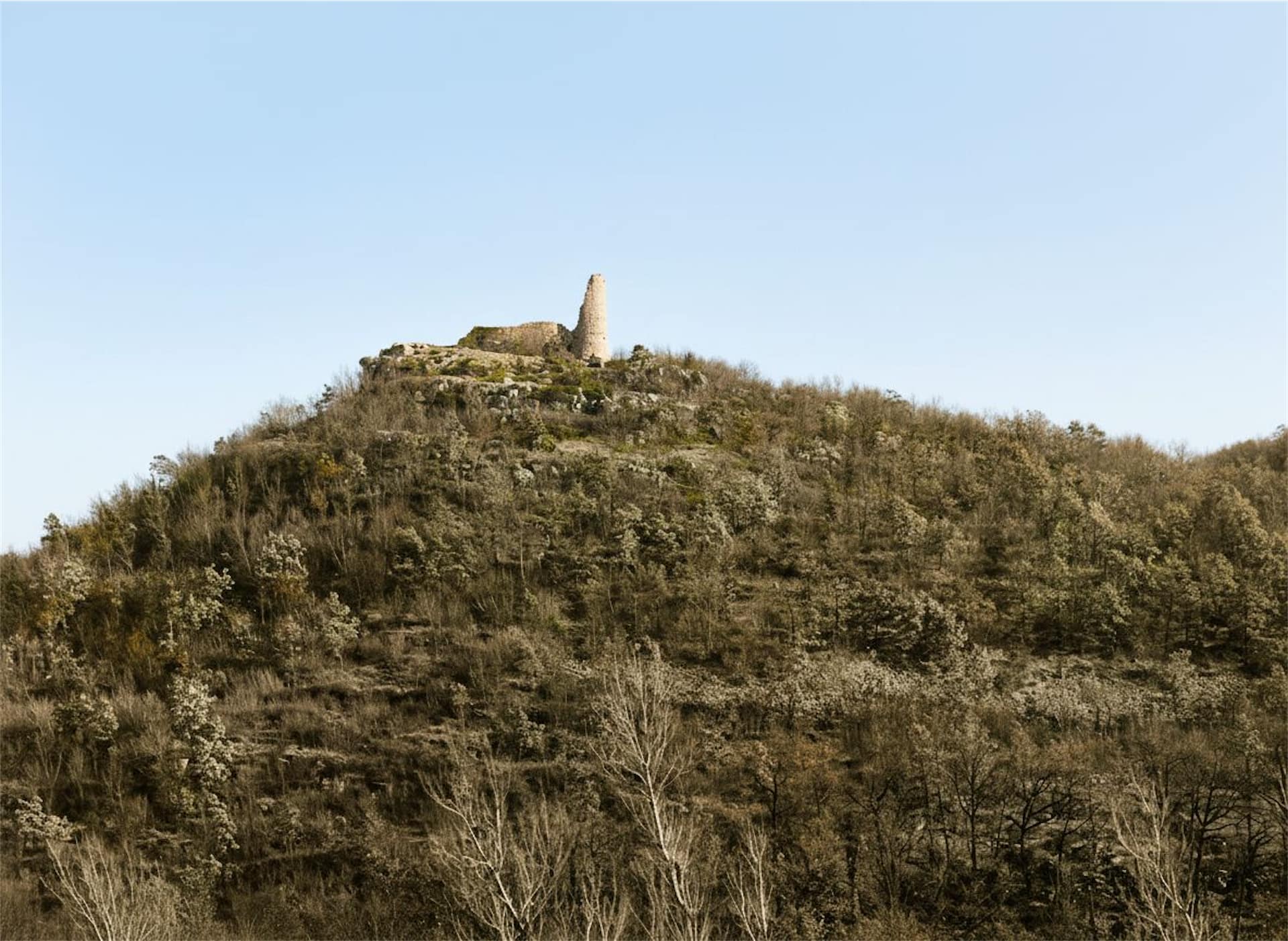
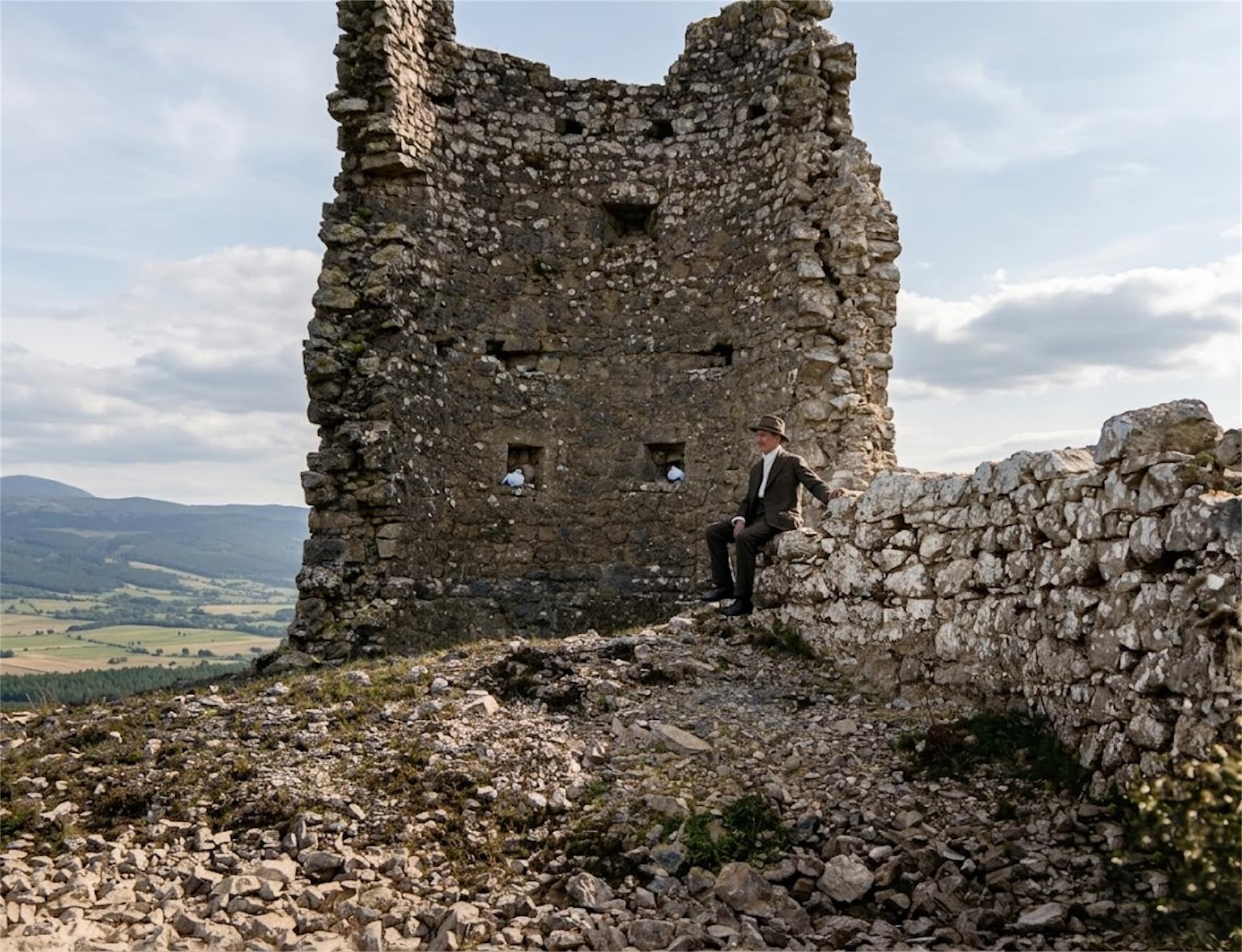
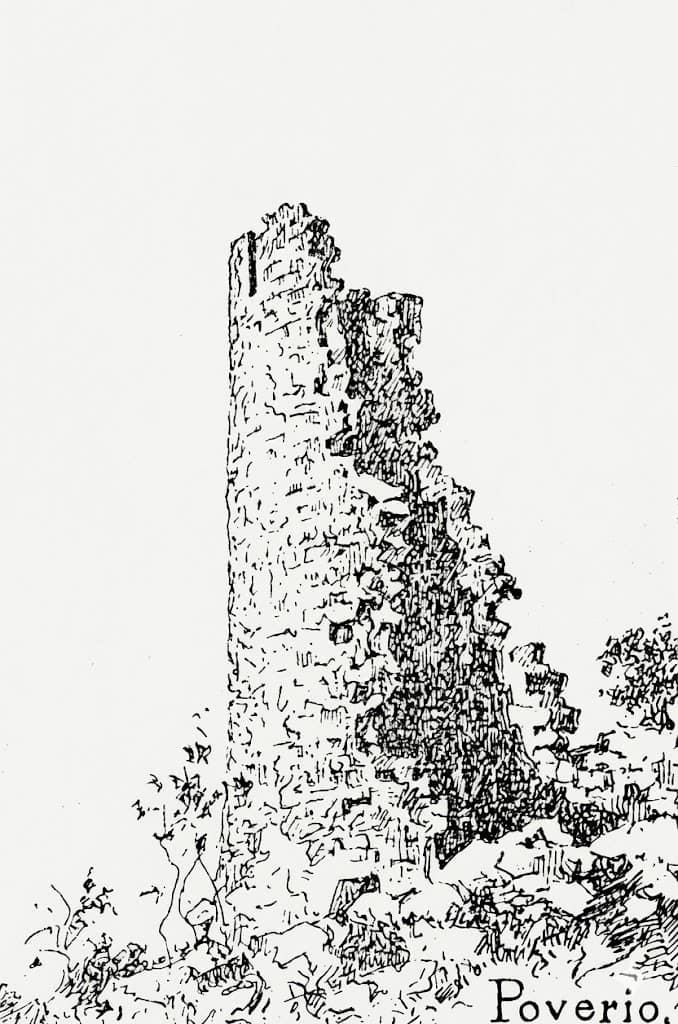
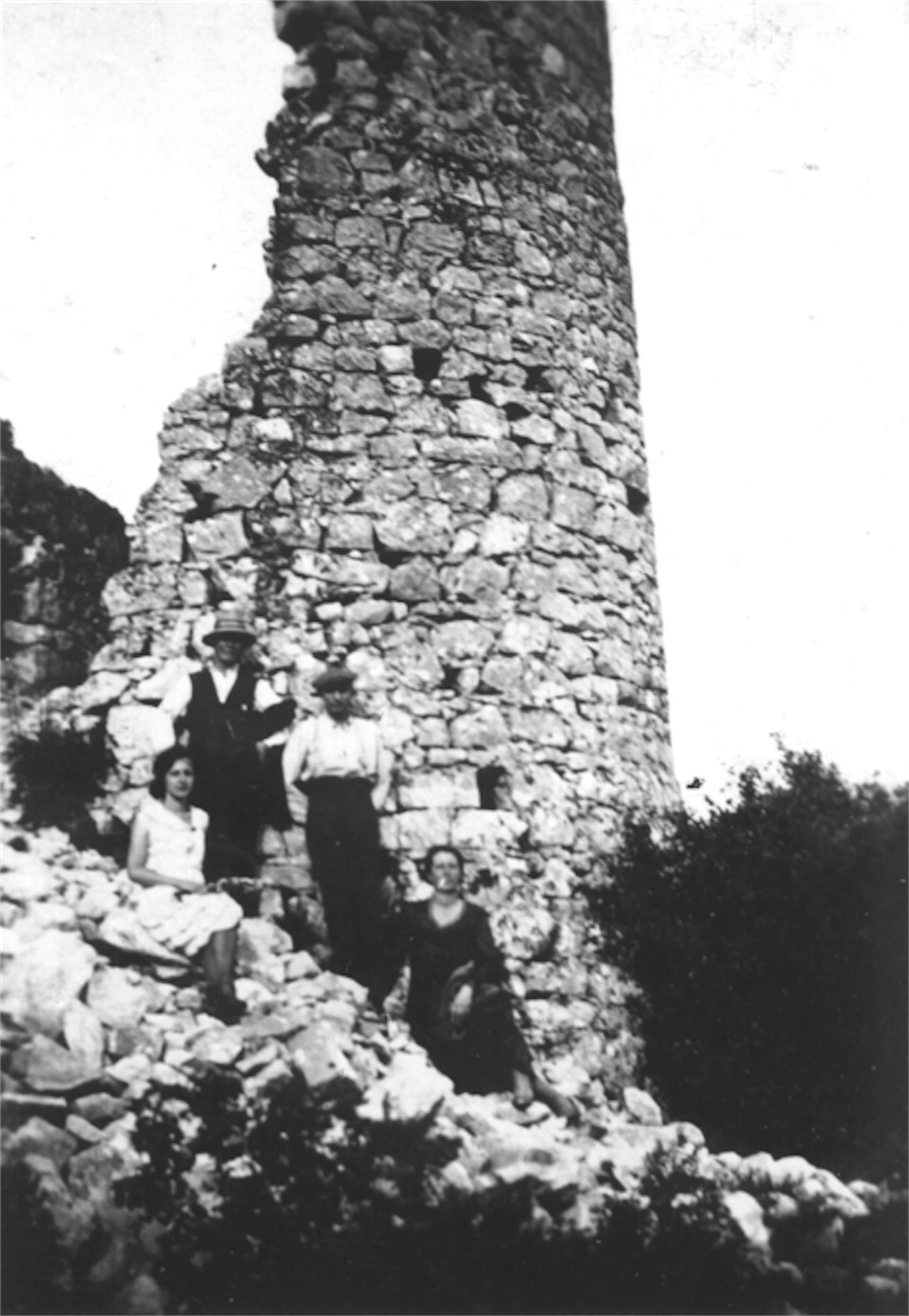
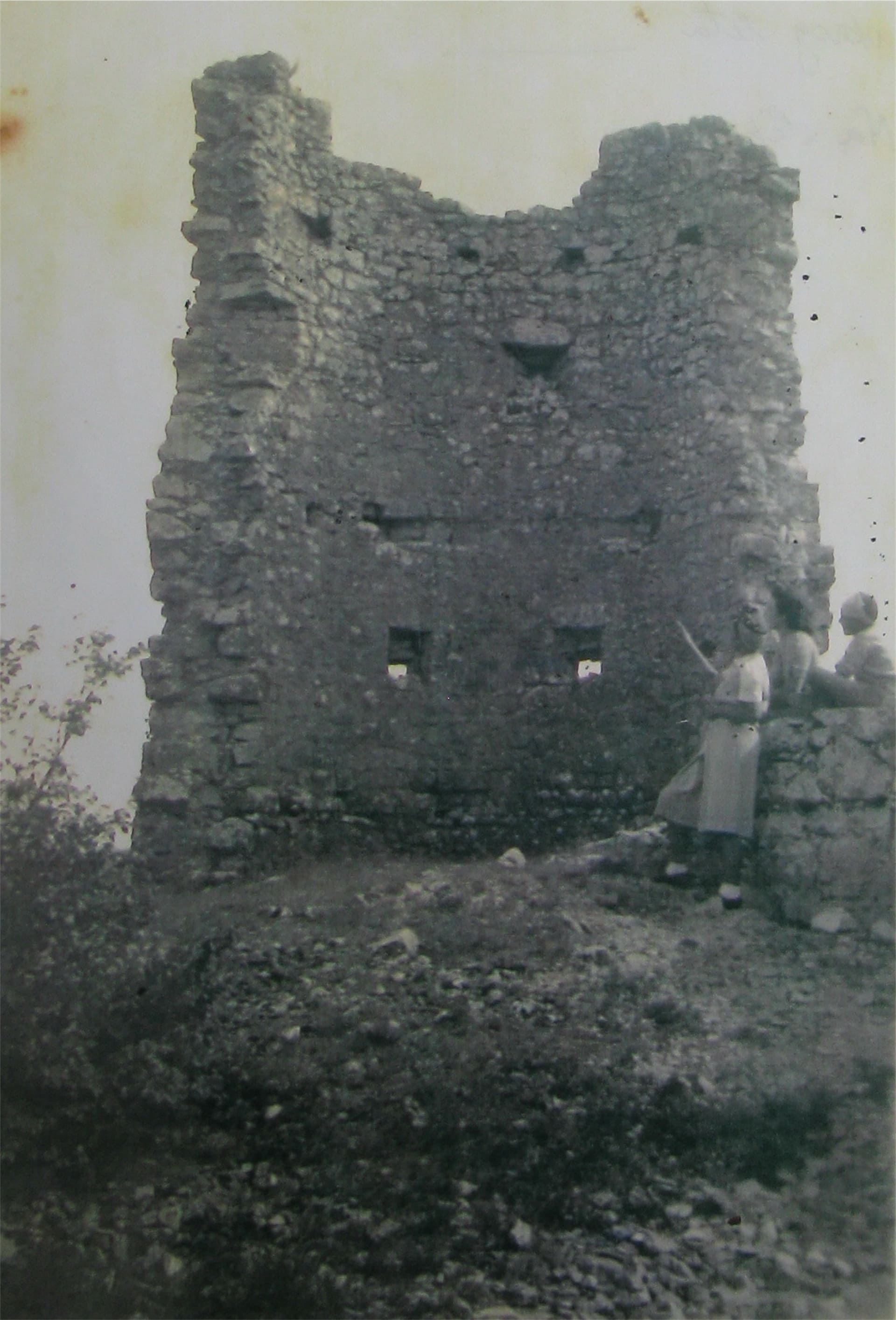
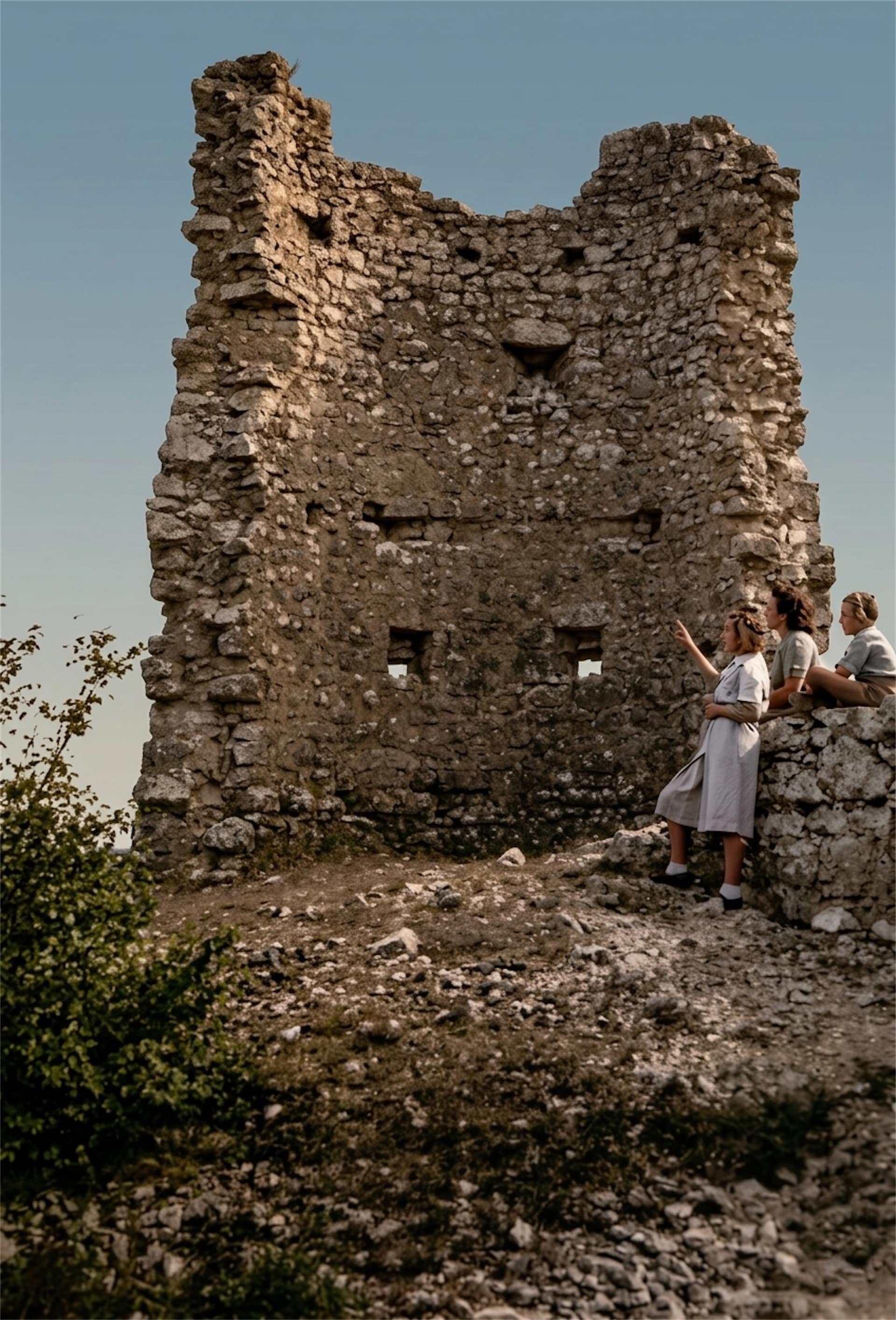
Just by curiosity, April 2014 Juan P. Maschio gathered every available source, from archival photographs and local testimonies to comparisons with similar Tabors, to attempt a reconstruction of the long-lost building.
He analyzed historical images (courtesy of the Civic Museums of Trieste and local archives) creating a precise 3D virtual model.
Today Tabor Hill and its archaeological site are recognized as a monument of national heritage (Slovenian Ministry of Culture Register No. EŠD 566).
The forests above Povir are open to hikers, and the paths to the top pass through patches of oak and hornbeam among the ruins. Interpretive signs and local guidebooks now mention the Bronze-/Iron-Age fortress and the later Tabor tower, ensuring that both layers of the site’s history are remembered. Though no visitor can climb the old walls, the very name Stari Tabor (Old Fortress) and Tabor Hill keep alive the memory of the rugged fortification that once guarded the village of Povir.
(back to Povir Tower main post)