16th Century: First Written Record
Alančių dvaras enters documented history in 1569, during the period of the Grand Duchy of Lithuania. At that time, the Alančiai lands were transferred from the Žilinskiai (Žiliński) princely family to a Vilnius court official holding the office of pakamaris (chamberlain). This transaction reflects the late-feudal landholding system in which estates were closely tied to service at the grand-ducal court. The manor functioned primarily as an agricultural domain worked by dependent peasants.
From the earliest sources, the place-name appears in multiple linguistic forms: Alančiai, Alantė, Alunčiai, shaped by Lithuanian vernacular usage as well as Polish, Ruthenian, and Latin administrative traditions.
17th Century: Expansion and Consolidation
The 17th century saw Alančių Manor integrated into a wider network of noble landholdings. In 1649, lands in the surrounding area—Kulngiškiai and Šilai—were purchased by Gabrielius Širvinskas, strengthening the territorial base connected to Alančiai. His son, Andrejus (Andriejus) Širvinskas, continued this policy of consolidation.
In 1696, Andrejus Širvinskas acquired Alančių lands from Aleksandras Oginskis, Voivode of Trakai, bringing the estate firmly under Širvinskas control. This century was marked by both expansion and growing financial pressure, reflecting the broader instability caused by wars, population losses, and economic decline across the Grand Duchy.
18th Century: Debt, Transfers, and Political Upheaval
At the beginning of the 18th century, accumulated debts led to a forced change of ownership. After Andrejus Širvinskas’ death, his widow Petronėlė Talatovaitė, together with their sons, transferred Alančių Manor to creditors in 1716.
In 1718, the estate was purchased by Mykolas Frackevičius. Later, by 1777, Alančių is associated with Jonas Franskevičius, identified in sources as Smolensk Voivode and connected to the broader Polish–Lithuanian nobility, including families linked genealogically to the Pilsudski lineage.
Following the Third Partition of the Polish–Lithuanian Commonwealth in 1795, the manor entered the administrative system of the Russian Empire. At that time, ownership is recorded as belonging to Adomas and Ieva Staševičiai, marking a transition into a new political and legal framework.
19th Century: Architectural and Economic Peak
The 19th century represents the most significant developmental phase of Alančių dvaras. In 1876, the estate was acquired by Antanas Rudamina, a member of a historically prominent noble family. Under Rudamina ownership, the manor reached its greatest architectural and functional extent.
The manor functioned as a major landed property, combining agriculture with estate-based production and a representative residential complex.
The estate grew to include approximately 15 buildings, forming a complete manor complex. These included a representative manor house, an oficina, stable, barn, servants’ house (kumetynas), and a riding hall (manege). A landscaped park covering about 14.7 hectares was established or reshaped during this period, featuring a canalized stream and a carefully planned composition of trees.
The park contained 13 native and 7 introduced tree species, including oaks, lindens, European larches, and black pines. Economically, the manor functioned not only as an agricultural center but also as a site of lace production, with products known beyond the local region. Antanas Rudamina died in 1884, after which the estate remained within the family for some time.
After Rudamina’s wife, Elena Rudaminienė-Žoltauskaitė, died in Florence in 1896, Alančiai manor was inherited by Ieva Rudaminaitė and Marija Magdalena Rudaminaitė.
Because his daughters were still minors, his brother Ričardas (Richard) temporarily managed the estate and handled property affairs on behalf of the family. During this period, the manor remained intact and operational.
By the end of the 19th century, the Alančių manor ensemble consisted of eight principal buildings, including the manor house, oficina, and several economic outbuildings. The estate’s landholdings were extensive.
Alančiai owned two subsidiary estates: Pašilė and Pabėgėliai, each with residential and farm buildings, as well as the Anitava palivarkas.
Altogether, the manor controlled approximately 996 tithe-sized land units (valakai / titald lands), making it one of the larger estates in the region.
20th Century: Decline and Neglect
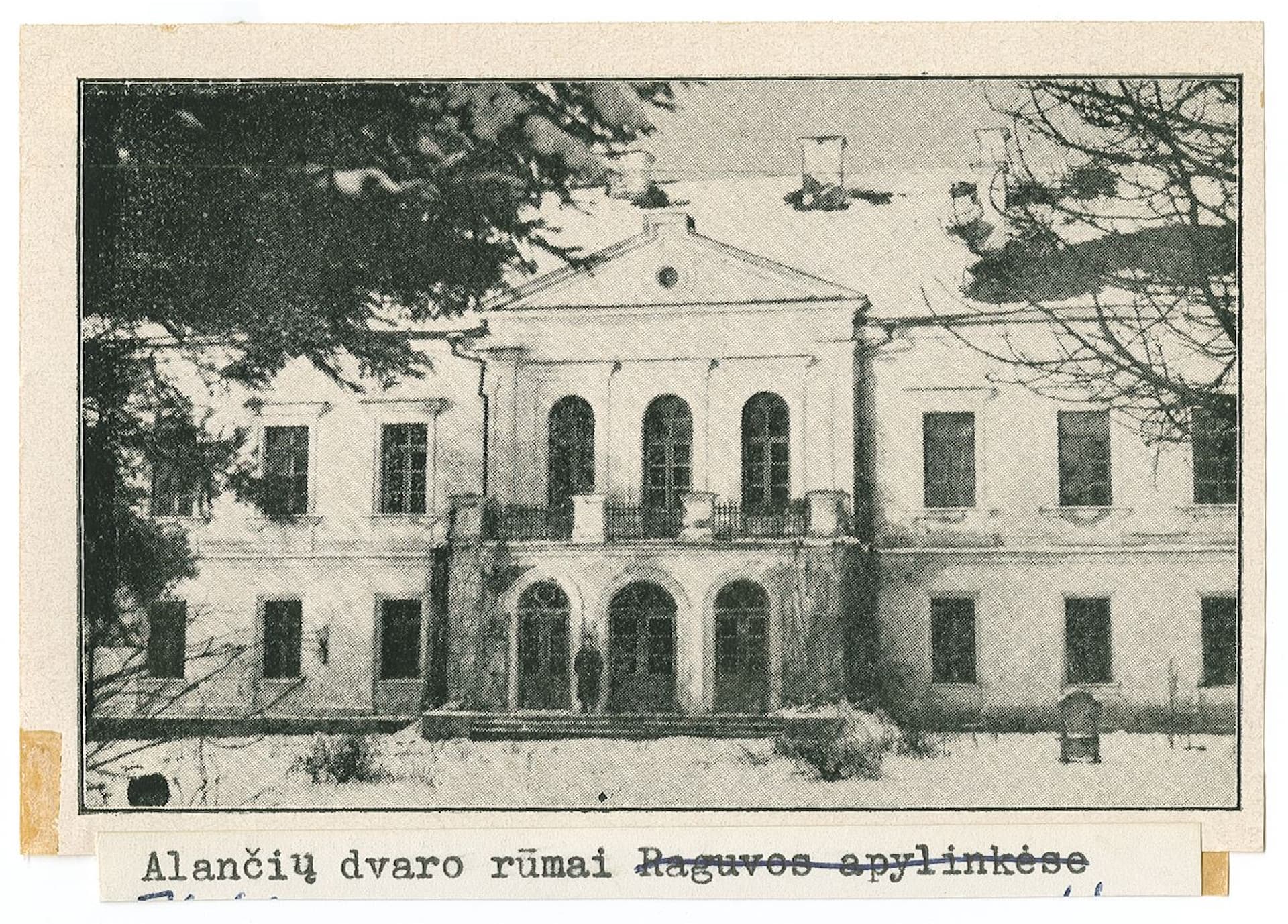
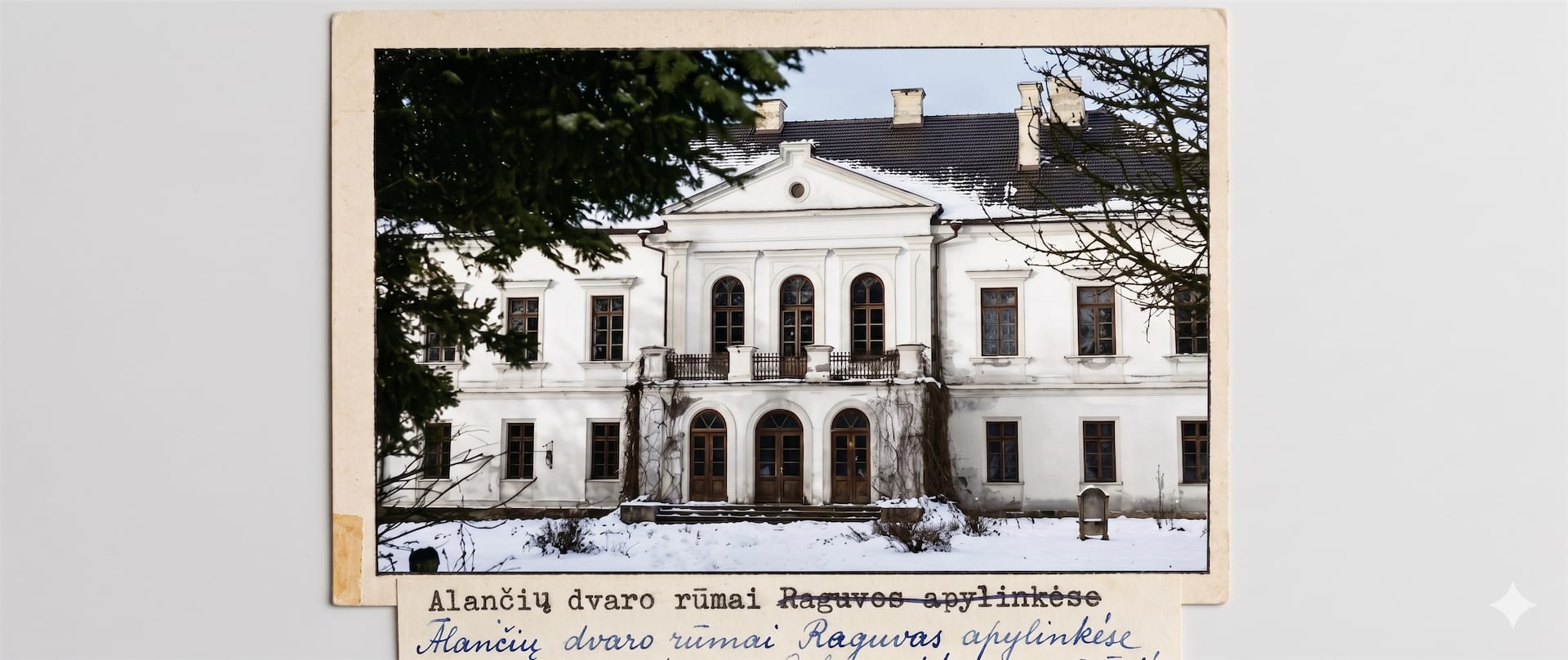
At the beginning of the 20th century, Alančių Manor was still a functioning and recognizable estate. A historical photograph published in 1908 in Tygodnik Illustrowany documents the manor’s appearance at that time.
In 1909, Ieva Rudaminaitė and Marija Magdalena Rudaminaitė, they financed the construction of buildings on Šilai Street and became founders of the Church of the Name of Jesus.
Magdalena Rudaminaitė, who lived in Alancia during the interwar period, still possessed a painting of the most renowned member of the family, Father Andrius Rudamina (1596–1631), accompanied by inscriptions in Latin and Lithuanian.
In the interwar period, Alančių dvaras appears in Lithuanian press and estate listings, including 1923 publications, where it is associated with the Rudamina name. These records confirm the manor’s continued legal and social presence during the period of the Lithuanian Republic.
By that year, Alančiai Manor contained one farmstead with 83 inhabitants.
In 1940, following nationalization, the manor (then comprising 80 hectares) was administered by the heirs of Magdalena Rudaminaitė.
Shortly thereafter, the Rudamina family fled to United States, having to escape Lithuania avoiding being exiled to Siberia by force by Soviets (since nobles, rich and well educated people were considered a threat to the Soviet regime, they use to exile them to Siberia from where many never came back), leaving behind Emilija Rudaminaitė, who suffered epilepsy and living on a lease, Soviets they allowed her to live still in one room of the manor.
She died around 1950 in total poverty.
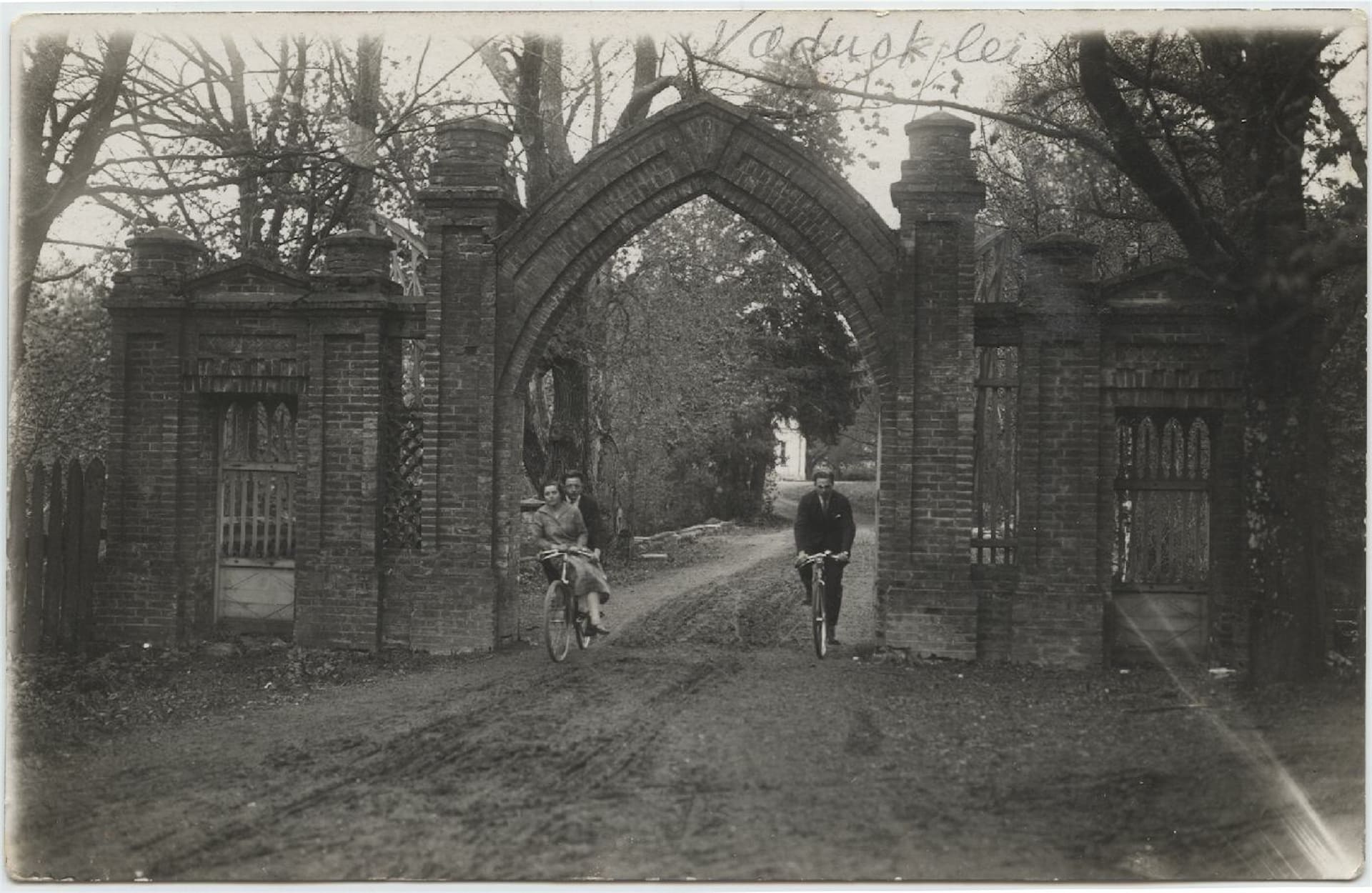
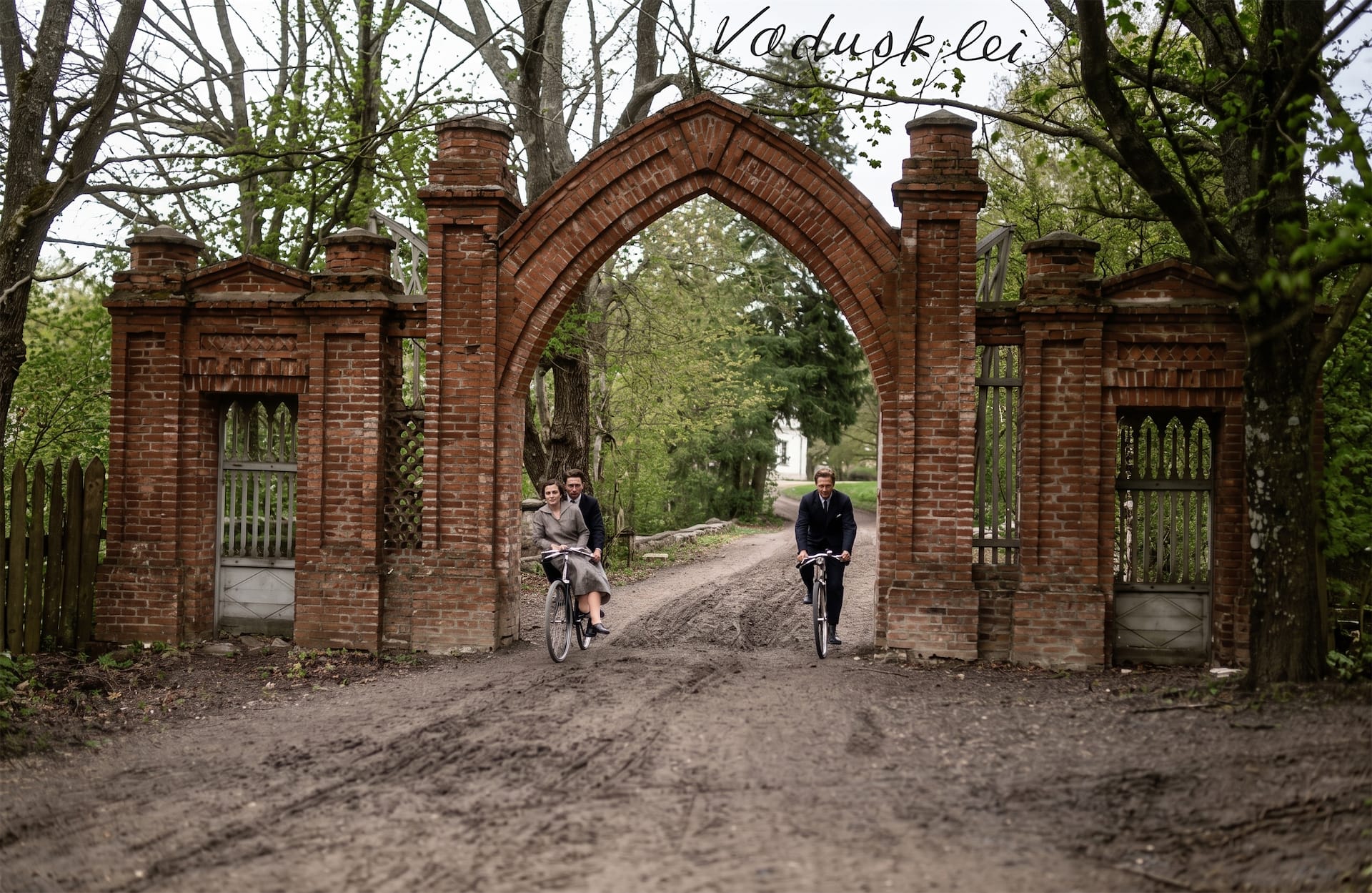
A 1940 description of the estate notes that it was very large, with an old park, and accessed through wide, stylistic masonry gates.
The manor itself was described as completely empty, with only a small portion occupied by tenants.
The mid-20th century, especially during the Soviet era, brought severe decline. The manor was nationalized, buildings were abandoned or repurposed, and systematic maintenance ceased. Roofs collapsed, interiors deteriorated, and the main manor house and officina were reduced to ruins.
Despite physical decay, the site attracted professional attention. In the 1980s and early 1990s, Alančių Manor was extensively documented through historical-artistic studies, dendrological research, architectural and photogrammetric measurements, and park evaluations. These studies were deposited in state archives and formed the basis for later heritage protection.
21st Century: Heritage Recognition and Research
By the late 20th century, Alančių dvaras was formally recognized as a protected cultural heritage complex. The officially registered components include the ruins of the manor house, ruins of the officina, barn, stable, servants’ house, manege remains, and the historic park.
Heritage documentation records the existence of 170 official photographic images as part of the site’s archival record. In the 2010s, emergency stabilization and partial restoration works were initiated. Although ownership changed several times, these efforts prevented further immediate collapse and preserved the remaining structures.
In 2025, while traveling along manor houses and ruins, Juan P. Maschio visited the ruins and here regained the inspiration to start once again with reconstructions, inspired in the sad story of Emilija Rudaminaitė, who dedicated herself despite her illness and helped the locals as much as she could during the dark times of the Soviet regime.
In few months he produced one of the most detailed models ever, and the first 3d model of this manor.
(back to Alančių Manor main post)