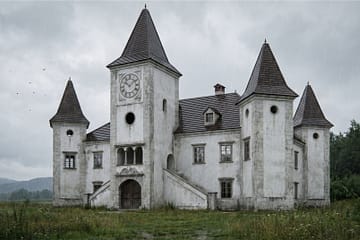
Hunting Lodge Nadlišek / Lovski Dvorec Pajkovo

The Nadlišek Manor (Pajkovo) was a Baroque-era rural residence established in the late 17th century by the Counts of Turjak (Auersperg family) after the abandonment of the medieval hilltop fortress above it.
Built as a hunting lodge and estate center, the manor reflected the shift from defensive strongholds to practical noble residences adapted to forestry, agriculture, and seasonal use.
Destroyed during World War II and never rebuilt, the site today survives only through scattered foundations, a former caretaker’s house, and its inclusion in local cultural and hiking routes, preserving its historical presence within the landscape rather than through standing architecture.
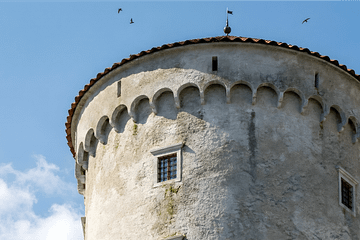
Pajkovo: The Full Story

The Nadlišek Manor (Pajkovo) was a Baroque-era rural residence established in the late 17th century by the Counts of Turjak (Auersperg family) after the abandonment of the medieval hilltop fortress above it.
Built as a hunting lodge and estate center, the manor reflected the shift from defensive strongholds to practical noble residences adapted to forestry, agriculture, and seasonal use.
Destroyed during World War II and never rebuilt, the site today survives only through scattered foundations, a former caretaker’s house, and its inclusion in local cultural and hiking routes, preserving its historical presence within the landscape rather than through standing architecture.
Školj: The Full Story

12th to 15th Centuries: Origins and Medieval Era Castle Školj stands on a steep crag above the Reka (Timavo) River near Famlje in southwest Slovenia. While no Roman fortification existed on this site, the surrounding Karst region was populated in antiquity. The castle’s origins trace back to medieval times: building Read more

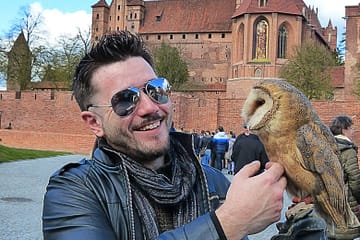
Interview for De viaje por el mundo magazine

In this interview, Juan Pablo Maschio speaks about his experiences exploring castles and ruins across Europe, sharing firsthand observations from historic sites and reflecting on the stories, memories, and emotions embedded in these places. Through travel and research, he offers a personal perspective on cultural heritage and the importance of understanding the past to preserve it responsibly.

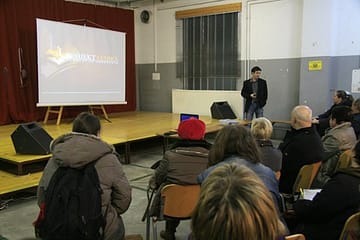
Presentation of Školj Castle in Famlje

In Famlje, Divača, Projekt Feniks presented the digital reconstruction of Školj Castle, sharing the results of nearly four years of research with the local community. The event allowed residents to see the castle as it once stood and sparked active interest, discussion, and reflection on the importance of protecting and preserving its ruins.

Interview for RTV Slovenija 1 about Školj castle

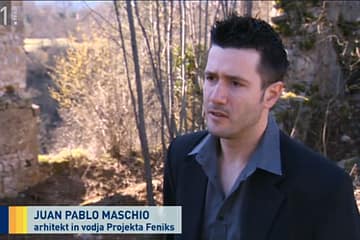
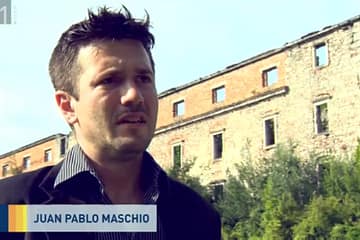
Journalist Barbara Renčof from RTV Slovenija 1 interviewed Juan Pablo Maschio at Školj Castle, focusing on the work of Projekt Feniks and the importance of recovering Slovenian cultural heritage. Mirjam Frankovič from TKŠD Urbanščica also contributed, highlighting the castle’s value and the potential impact of its restoration on the local area.

Interview for RTV Slovenija 1 about Haasberg Palace

In an interview broadcast on RTV Slovenija, Juan P. Maschio and Tanja Žigon spoke with journalist Barbara Renčof about Haasberg Palace, discussing its historical importance, current condition, and the challenges surrounding its preservation.

Interview at Studio Proteus TV about Haasberg

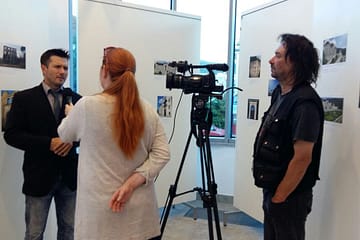
Juan P. Maschio was interviewed by TV Studio Proteus Postojna during the opening of the Haasberg exhibition at TIC Galerija Postojna, discussing the reconstruction work and the cultural significance of Haasberg Palace (see minute 12:41).

Interview at Pogled v Znanost – Radio ARS (RTVSlo)

Architect Juan Pablo Maschio was interviewed by Goran Tenze for the cultural program Pogled v znanost on Radio ARS Slovenija, discussing his work within Projekt Feniks and the broader challenges of preserving Slovenian cultural heritage. The conversation also touched on his digital reconstructions, public lectures on heritage and identity, and his exhibition “Dvorec Haasberg se prebuja,” presented at TIC Postojna.

Interview for Domovina News (Slovenia)

In this interview for Domovina, Juan P. Maschio reflects on his work with Slovenian castles and cultural heritage, highlighting the importance of research, respect, and long-term vision in preservation.
He shares insights from Project Feniks and stresses the need for a stronger collective appreciation of Slovenia’s historical legacy.

error: Copyright © 2026 Feniks Transcending Heritage. All Rights Reserved.