– Adelsberg Castle –
The Eternal Keeper of Postojna Gate
(Aarsberg, Adelsberg, Adlersberg, Adelsperg, Arensberg, Arišperk, Arenšperk, Ariperch, Arnesperch, Posthoyma, Postoyna, Stari Grad, Grad Postojna)
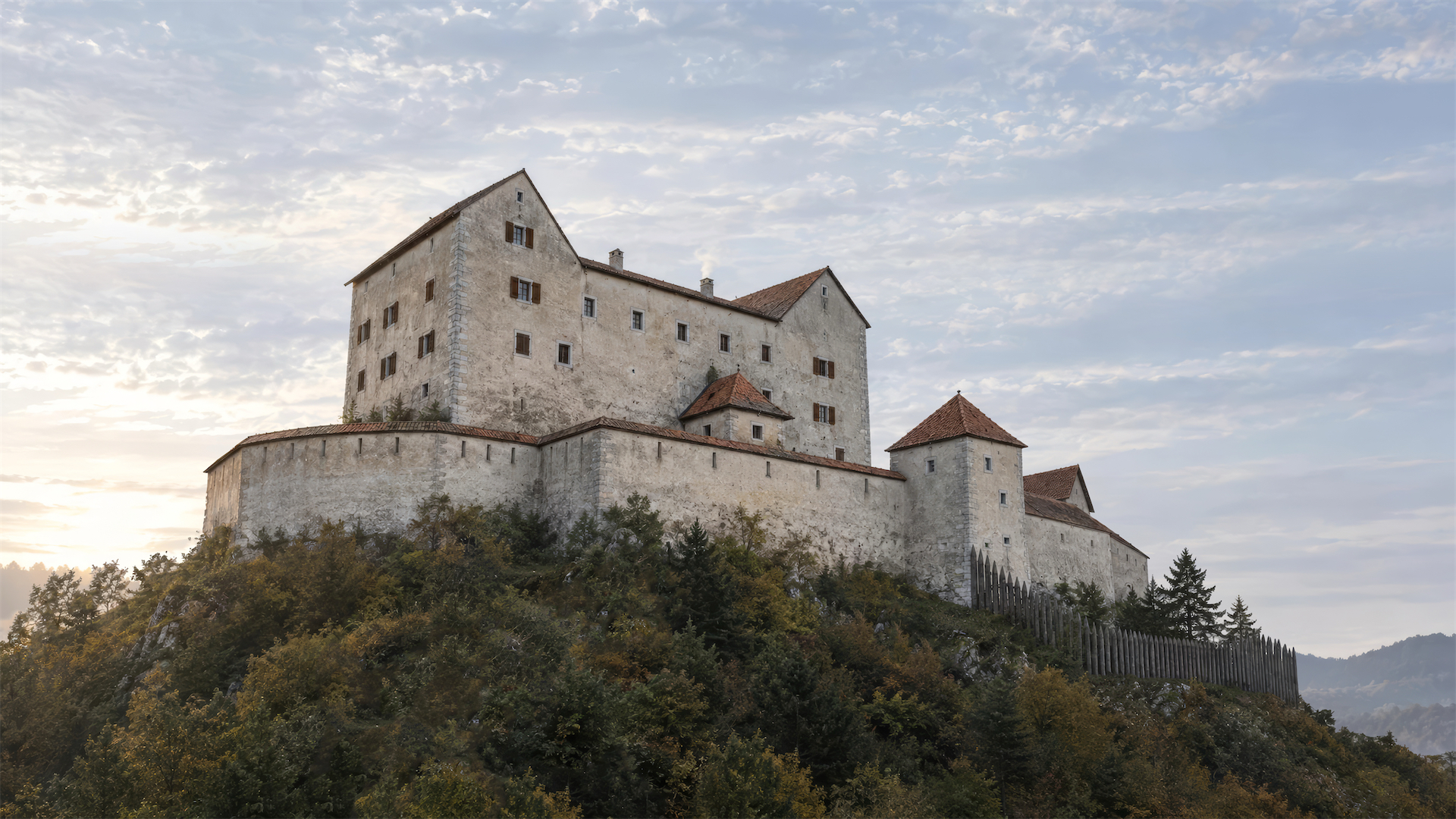
Adelsberg Castle, also known historically as Grad Postojna or Stari grad, was a medieval hilltop fortress located on Sovič Hill above the town of Postojna in Slovenia.
Overlooking the Postojna Basin and key karst routes, the castle occupied a position of exceptional strategic and symbolic importance for centuries.
Its setting connects natural topography with defensive architecture, making it one of the most distinctive historical landmarks in Inner Carniola.
The site has been valued since prehistoric and Roman times, long before the medieval castle was built. Today, Grad Postojna is recognized as a protected cultural monument and an essential part of the town’s historical identity, complementing Postojna’s better-known subterranean heritage with a powerful presence above ground.
The castle got it’s name during the XIIIth century from the White-tailed Eagle (Haliaeetus albicilla), when the region was under the Austrian Empire.
In German the name “Adelsberg” means “Eagle’s nest), and “Postojna” was the name that this eagle received in old Slovenian dialect (currently Belorepec) which used to nest on top of the Sovič hill.
Nowadays, with only 5 mating couples surviving the White-tailed eagle Slovenia are about to become extincted, same as the ruins of the old castle, but thanks to it, these amazing birds will remain for all the posterity, because the city itself got their name “Postojna”, and it even became the city’s heraldic protector animal on its coat of arms.
( For a more detailed history of Adelsberg Castle press here )
Prehistory and Romans – The First Settlements:
Long before the medieval castle was built, Sovič was already an important settlement.
Archaeological discoveries reveal a prehistoric hillfort (gradišče) dating from the Middle Bronze Age through the Iron Age, with settlement terraces, possible defensive ramparts and pottery showing connections with neighbouring regions.
Its strategic position above the Postojna Gate, the natural passage between the Adriatic and the continental interior, remained important in Roman times.
Older local accounts describe a Roman fortification on the hill, citing surviving masonry and Roman coins found, although this remains historical tradition rather than confirmed archaeological evidence.
Most likely the Romans recycled the rocks which formed the old Hill-fort (gradišče), in order to build their castrum, that’s why nowadays there’s only a small portion of it as an evidence of the Prehistoric past of the hill fort.
From the few remains of the castle itself, we can see that the Romans potentially have used these rocks combining them with their typical mortar concrete (opus caementicium), using perfectly carved stone blocks as a formwork, explaining its great resistance until nowadays.
Nearby, the Romans developed the defensive system of Claustra Alpium Iuliarum, centred on the fortress of Ad Pirum at Hrušica, to secure this important route. Sovič’s commanding position overlooking the Postojna Basin may also have served a defensive purpose, although this has yet to be established archaeologically.



13th / 15th century – Medieval Times:
The origins of Grad Postojna date back to the 12th century, when a medieval fortress was established on Sovič Hill, a site already known for earlier defensive use. The castle is first mentioned in written sources in 1228 under the Latin name Castrum Arnisperch, confirming its importance within regional power structures. It was likely built or expanded by the Counts of Andechs, who controlled large territories in present-day Slovenia and used castles to guard trade routes between Central Europe and the Adriatic.
In the 14th century, the castle passed into the hands of the Patriarchs of Aquileia and soon after became associated with the powerful Counts of Celje. Under Celje administration, Grad Postojna functioned as the center of a large feudal estate and an important administrative seat in Inner Carniola. After the extinction of the Celje dynasty in 1456, the castle reverted to Habsburg control and became a princely estate administered by imperial officials.
But to enlarge the castrum, they had to extract and carry the stones to the top of the Sovič hill, that was quite a major work and required extensive force work.
Thanks to the latest LiDAR satellite imagery, we can tell that in order to enlarge the Castrum during the medieval times and future periods, they opened a quarry behind the hill itself (where nowadays there’s a shooting polygon). Today it’s partially covered with trees and bushes, making it look like a natural formation, but from the imagery we can confirm that this it was a manmade formation.
Potentially it served as a quarry to build further structures in the town.


15th / 16th century – Invasions and Disaster:
During the late 15th and 16th centuries, the castle played a key defensive role during Ottoman and Venetian invasions into the region and survived multiple periods of instability, resisting strongly the constant incursions.
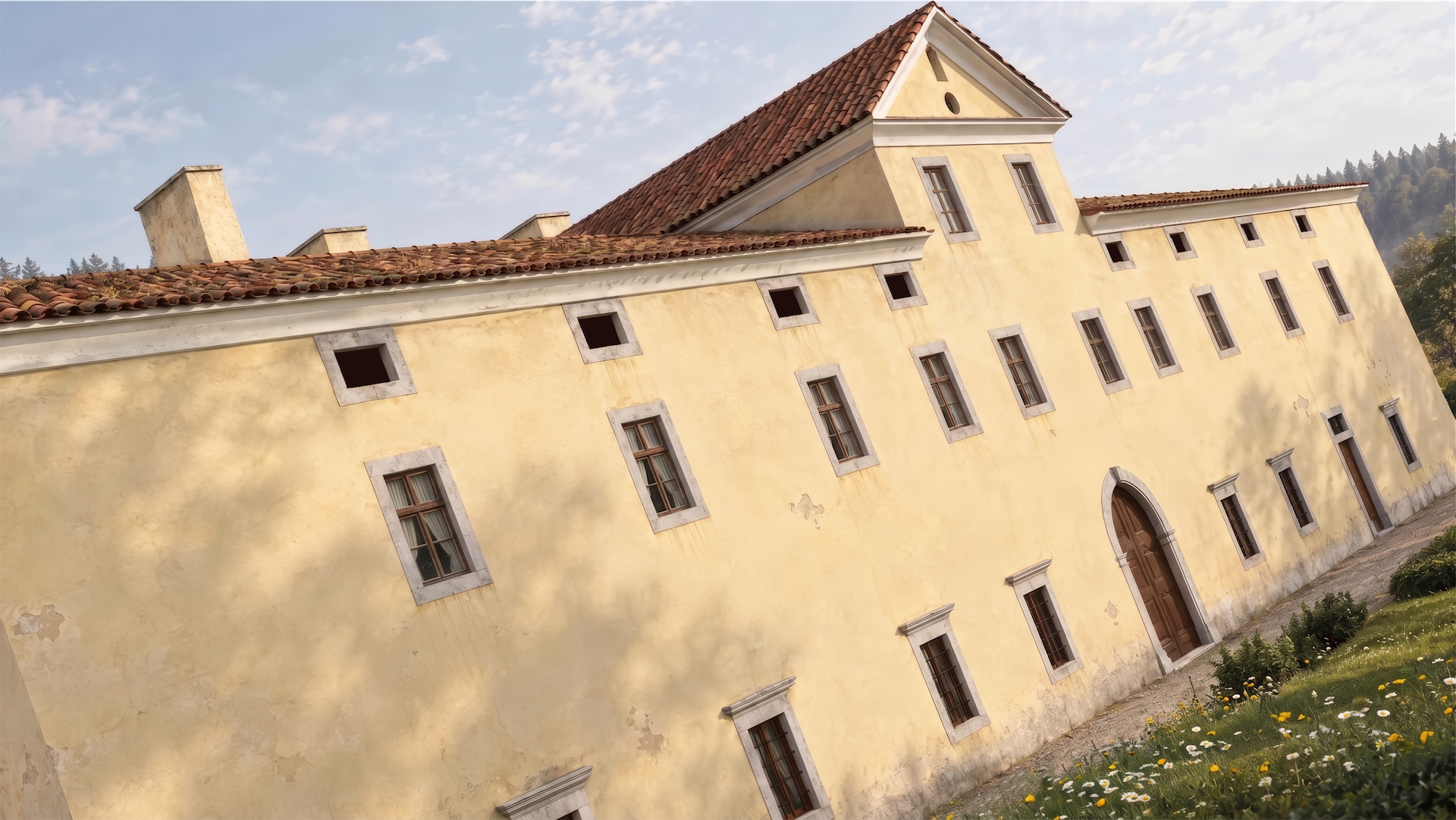
Most likely the castle suffered heavy damage on the defensive walls, and they had to be reinforced, with the construction of two additional defense towers, a round one and a squared one (typical ways from the Renaissance period) with their traditional “flower-shape” shooting loopholes.
We already see the horse stables already built, along the century there were plans for moving the Lipica royal studs to Postojna, fact that would have rendered the castle to even a more important level, but unluckily this plan was never implemented.
But unluckily the famous earthquake of 1511, which totally destroyed many castles in the region (such as Hošperk, Šteberk, Dornberk, Senožeče, among others) caused serious structural damage, as one of the old drawings show, where we can deduce the presence of a massive crack in the Southeast corner of the main building, with a potential risk of collapse, fact that we can confirm in later drawings, where it is very clear which solution they implemented and how it modified the floorplan.
As well, according to the floorplans we have from the 16th century, there was an extensive expansion planned. Including the construction of three defensive bastions, and potentially more (giving progressively the castle a more modern “star” fortress aspect), but from the latest LiDAR satellite scans, we cannot observe any traces of these bastions as well as of the expansions. We could come to the conclusion that due to the steep slopes of Sovič hill and the necessity for taking care of the damage after the earthquake of 1511, was never built.


16th / 17th century – Golden Age:
The fortress was repaired and remained in use as main seat of the crown representatives, but additionally having to cover the legal responsibilities of the surrounding castles that were lost or damaged during the tragic earthquake.
In 1581, the estate was sold to the influencial Eggenberg family, marking the beginning of a gradual shift away from the hilltop fortress as a primary residence to a newly built residential manor house in the main square of the town (nowadays the building of the Karst Research Institute – Inštitut za raziskovanje krasa)



17th / 19th century – Afermath:
Unluckily by the end of the 17th century, a lightning induced a fire and later a catastrophic blaze in 1689 totally destroying the castle.
Despite it could have been saved, after this event, the fortress was abandoned in favor of the newly built manor house in the city square.
From that point onward, Postojna’s castle ceased to function as a residence and became a historic landmark rather than an active stronghold.


Already the few depictions of the 19th century show that only few traces of the castle remained standing.
So how such a massive structure could disappear in only one century and a half?.
It seems like if it would have been taken by the Burja wind?, the answer is simple: the primitive town suffered of constant fires due to the houses being made of wood.
When all the material is abandoned, hence for free, already processed, without the necessity of being quarried from the side of a mountain, then all you can do to save your home from fires and make it much more resistant is to take it.
As well with decorative parts such as surviving beams, corbels, window or door stone frames, you can imagine carts pulled by local horses and mules, going up and down, carrying piece by piece the castle to their homes.
The Gothic frame found by Juan P. Maschio in one of Feniks expeditions, are of similar size and variety of stone as those found in many buildings in the old core of Majlont district (the oldest neighborhood of Postojna), confirming that the castle has been used as a quarry.
The few remaining parts of the castle, however, were demolished by the occupying Fascist army to make way for a bunker and an anti-aircraft battery, which required an unobstructed field of view and clear lines of fire.
The Italian bunker and military tunnels on Sovič Hill (above Postojna, Slovenia) are part of the Alpine Wall (Vallo Alpino), an extensive fortification system built by Italy in the 1930s under Benito Mussolini to defend its borders against the former Yugoslavia.


Location and Strategic Placement
Grad Postojna occupies the summit of Sovič Hill, commanding panoramic views over the Postojna Basin and the natural corridor linking Inner Carniola with the Adriatic coast.
This position allowed effective control over trade routes, military movements, and access through the Postojna Gate, one of the most important karst passages in the region.
The castle’s architecture was closely adapted to the terrain, using steep slopes and rocky outcrops as natural defenses. Over time, the complex included residential buildings, defensive walls, towers, courtyards, and service areas, forming a self-sufficient fortified center.
Beyond its military role, Grad Postojna served as an administrative hub for the surrounding estate. It symbolized authority, collected rents, provided refuge during times of danger, and shaped the development of the town below, which grew under its protection.
Current Status
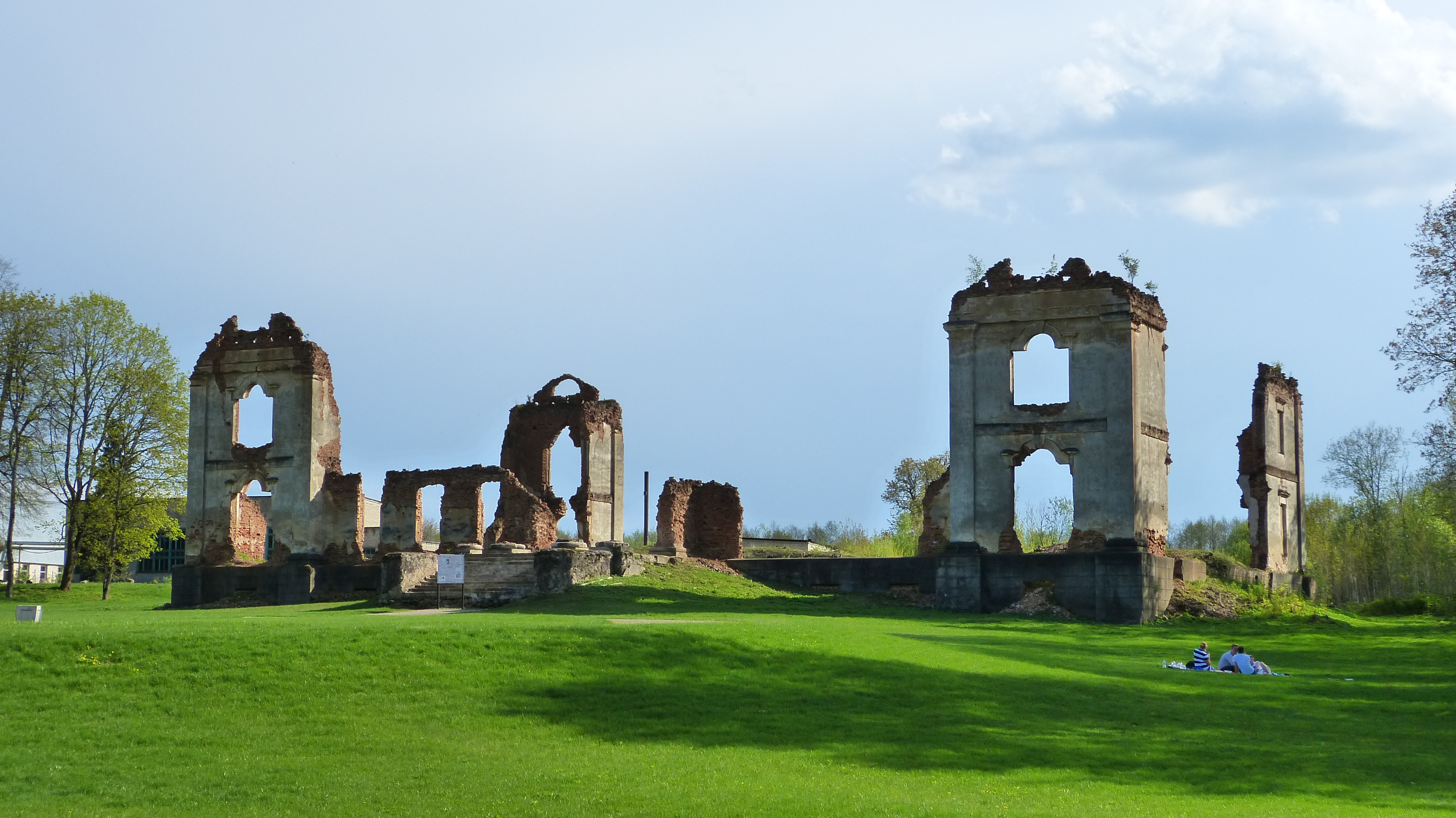
Today, Grad Postojna is protected as a cultural and historical monument of Slovenia. The remaining structures, foundations, and walls clearly outline the former scale and organization of the castle complex, allowing visitors to understand its original form and function.
Along the years, the place has been the focus of historical research, documentation, and interpretation, though small scale archaeological excavations been carried out, bringing to light many important discoveries, due to the size of the site, still there are more things to be unveiled below the soil.
Marked trails, with few informational panels, and maintained access routes make the castle hill accessible to visitors while preserving its character.
In recent years, renewed scholarly and local interest has strengthened awareness of Grad Postojna’s importance. Together with the town of Postojna and its world-famous cave, the castle represents a complementary layer of heritage one rooted in landscape, power, and long-term human presence above the karst plain.


Potentiality and Future
Postojna owns one of the most interesting museums in Slovenia (Notranjski Muzej Postojna), and its specialists and researchers are constantly on the move, trying to share the past of the city to the world and every new discovery it’s made on the region.
But it would be great, due to its historical importance, that the hill would be adapted into a thematic and educational park dedicated to the city of Postojna and it’s prevalence.
After all, Postojna owes its existence to Sovič Hill, where the first hint of civilization in the region everything began.
The site has great potential to become a connection node for all the attractions around, The Betal Rock Shelter (Betalov spodmol), Postojna Caves (where the first explorers ventured and later became the first inhabitants by settling in the caves), it’s amazing museum and dedicated vivarium station,the complete and fascinating Museum of Postojna, and of course the one and only Predjama Castle.
The Adelsberg Park, could be equipped with resting benches, waste containers, drinking water fountains, solar-powered charging stations, and, most importantly, interactive installations offering virtual historical reconstructions and natural interpretations—not only of the castle and the town, but also of the region’s flora and fauna.
Although from the original castle sadly remains just a mere 2%.
Unluckily with the current motto: “they are just crumbling rocks…”, and without any intention of consolidation of the remaining ruins, in order to preserve the very first tangible construction that brought life to Postojna (at least as a symbol or the birth place of the city), as the time passes by, and the nature keeps on doing its job, Adelsberg is vanishing.
Along Majlont district, we may find many items that belonged to the castle and were brought by the locals to be used to rise or embellish their homes. Romanic, Gothic and Renaissance stone elements (corbels, frames, stair-steps, iron bars, portals, windows, etc…).
Almost as if the fate of the castle were, to be the starting point and then to be torn apart on the quest of expanding and improving the old town.
Perhaps, it was the last wish of the castle’s spirit, to embrace each generation of citizens of Postojna, and stay with them protecting their homes forever.
Location